

Selling Your NZ Domain
To sell your domain name in New Zealand, first determine its market value based on keywords and extensions like .co.nz or .nz. Next, list it on reputable domain marketplaces, directly pitch to local businesses, negotiate a fair price, and securely transfer ownership using an authorized domain name registrar.
Selling a domain name in New Zealand can be a highly lucrative endeavor if you understand the local digital real estate market. Whether you are a seasoned domain investor or a business owner looking to offload an unused web address, the process requires strategic planning, accurate valuation, and a secure transfer mechanism. The New Zealand domain ecosystem, overseen by the Domain Name Commission (DNC), has specific rules and nuances, particularly concerning .co.nz and the shorter .nz extensions. This comprehensive guide will walk you through every step of the process, ensuring you maximize your return on investment while executing a safe, compliant transaction.
How Do I Prepare to Sell My Domain Name in New Zealand?
Proper preparation is the cornerstone of a successful domain sale. Before you list your digital asset on the market, you must objectively assess its value, ensure there are no legal encumbrances, and create a welcoming environment for potential buyers. Rushing this phase often results in leaving money on the table or encountering legal roadblocks that can derail a sale entirely.
Valuing Your .co.nz and .nz Assets
Determining the correct asking price for your domain is both an art and a science. In New Zealand, the value of a domain is heavily influenced by its length, memorability, and commercial applicability. The primary extensions in the local market are .co.nz (the traditional business standard) and .nz (the modern, shorter alternative introduced in 2014). Generally, exact-match keyword domains (e.g., aucklandplumber.co.nz) hold significant value for local service businesses looking to capture local search engine traffic. To appraise your domain, start by researching comparable sales. While global databases like NameBio are useful, you should also monitor local platforms like TradeMe to see what similar Kiwi domains are selling for. Consider the search volume for the keywords within your domain using SEO tools. If thousands of New Zealanders are searching for your domain’s keywords every month, its value increases exponentially. Remember that domains with hyphens or numbers are typically worth significantly less than pure, alphabetical strings.
Navigating Legal and Trademark Considerations in Aotearoa
Before attempting to sell your domain, you must ensure you have the legal right to do so without infringing on existing trademarks. The New Zealand Intellectual Property Office (NZIPO) holds the registry for all registered trademarks in the country. If your domain name directly matches a trademarked brand name that you do not own, attempting to sell it—especially to the trademark holder at an inflated price—can be considered cybersquatting or bad faith registration. The Domain Name Commission operates a Dispute Resolution Service (DRS) that allows trademark holders to challenge and potentially seize domains registered in bad faith. To protect yourself, conduct a thorough search of the NZIPO database. Focus on selling generic, descriptive domains (like cheapcarrentals.co.nz) rather than brand-specific names. Ensuring a clean legal slate protects you from costly disputes and assures buyers that they are purchasing a safe, legitimate asset.
Creating an Optimized Domain Landing Page
When a potential buyer types your domain into their browser, what do they see? If they encounter a generic error page or a confusing registrar holding page, you are losing potential sales. Setting up a dedicated “For Sale” landing page is one of the most effective ways to capture inbound leads. This page should be clean, professional, and explicitly state that the domain is available for acquisition. Include a straightforward contact form that allows interested parties to submit an offer or inquiry directly to your inbox. You can build a simple landing page using website builders, or utilize domain parking services that automatically generate sale pages. Ensure your contact details are up to date in the DNC WHOIS database (if you haven’t opted for privacy), as serious corporate buyers will often use this registry to find the owner of a domain they desire.
Where Can I Sell My Domain Name in New Zealand?
Once your domain is prepared and priced, you need to put it in front of the right audience. The marketplace you choose will dictate the type of buyers you attract, the fees you pay, and the speed of your sale. A multi-channel approach—combining local platforms, global marketplaces, and direct outreach—often yields the best results.
Utilizing TradeMe for Unrivaled Local Reach
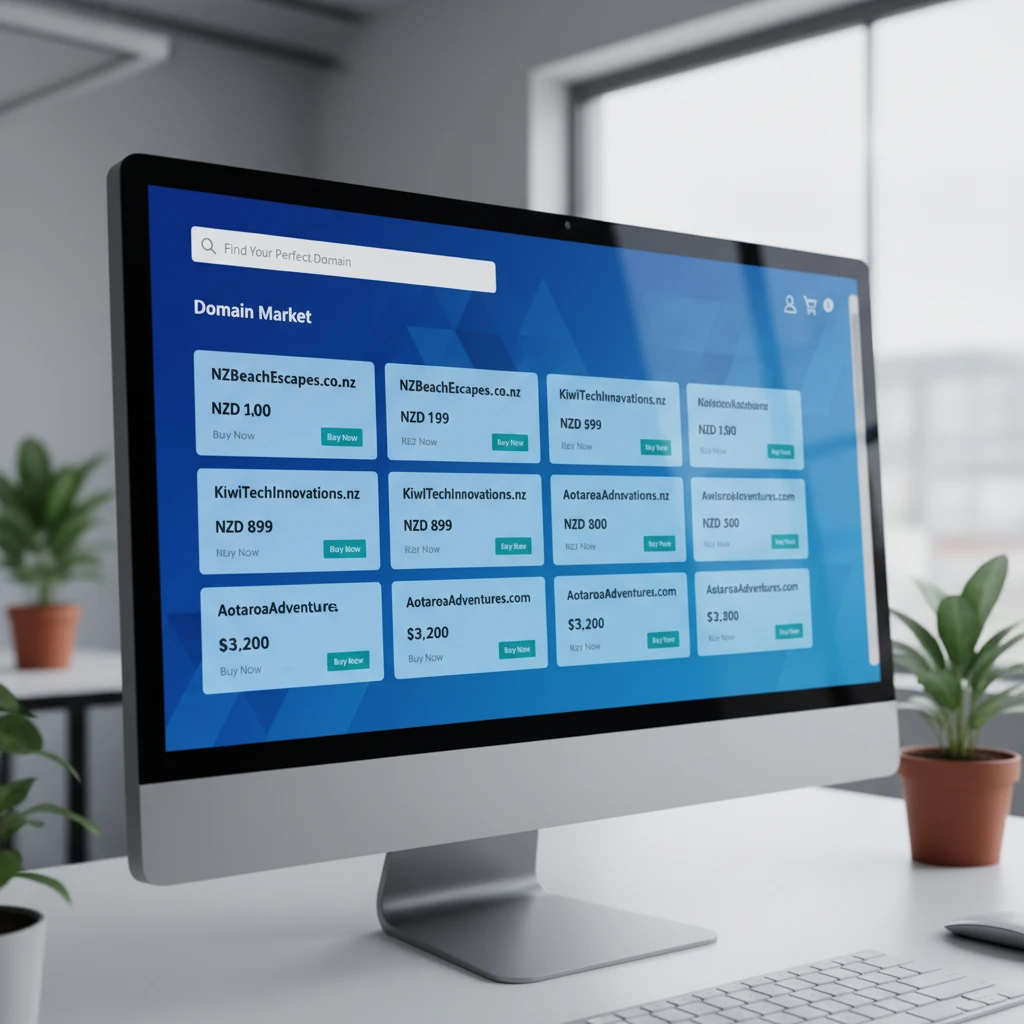
In New Zealand, TradeMe is the undisputed king of online marketplaces, and it features a dedicated category for domain names and websites. Listing your domain on TradeMe provides immediate visibility to thousands of Kiwi business owners, entrepreneurs, and investors. When creating your TradeMe listing, treat it like a premium real estate advertisement. Write a compelling description that highlights the domain’s potential uses, its SEO value, and why it is a superior choice over alternative names. Be transparent about the renewal costs and the current registrar. You can choose to run a traditional auction, set a fixed “Buy Now” price, or invite offers. Keep in mind that TradeMe charges success fees, so factor this into your pricing strategy. TradeMe is particularly effective for domains that appeal to small-to-medium enterprises (SMEs) operating strictly within New Zealand.
Leveraging International Domain Marketplaces
While your domain has a New Zealand extension, your buyer pool is not strictly limited to local residents. International corporations expanding into Oceania, global investors, and expatriates are often in the market for premium .nz assets. Listing your domains on massive global platforms like Sedo, Dan.com, and Afternic exposes your portfolio to a worldwide audience. These platforms specialize in domain aftermarket sales and offer built-in escrow services, making the transaction secure for both parties. Dan.com, for instance, allows you to point your domain’s nameservers to their platform, instantly creating a highly optimized, conversion-focused landing page. While these international brokers typically charge a commission (ranging from 10% to 20%), the access to high-net-worth buyers and the seamless transaction infrastructure often justify the cost, especially for premium, high-value domains.
Executing Direct Outbound Sales to Kiwi Businesses
Sometimes, the best way to sell a domain is not to wait for buyers to come to you, but to proactively pitch it to the perfect end-user. Outbound sales require research, tact, and perseverance. Start by identifying local businesses that could benefit from your domain. For example, if you own wellingtonroofing.co.nz, search Google for roofing companies in Wellington that currently use subpar, lengthy, or hyphenated domain names. Use the New Zealand Companies Register to find the directors or key decision-makers of these companies. Craft a concise, professional email outlining the benefits of upgrading their digital storefront. Focus on the value proposition: increased brand authority, better search engine rankings, and preventing competitors from acquiring the name. Avoid aggressive sales tactics; instead, position yourself as a digital asset manager offering a unique opportunity. Outbound sales bypass marketplace commissions entirely, allowing you to keep 100% of the negotiated price.
How Do I Negotiate the Best Price for My NZ Domain?
Negotiation is where the actual profit is made. Once you receive an inquiry or an initial offer, your ability to navigate the conversation will determine whether you close a lucrative deal or walk away empty-handed. Understanding buyer psychology and standing firm on your asset’s value are critical components of domain negotiation.

Establishing Your Floor Price and Buy It Now (BIN) Value
Before you enter any negotiation, you must establish two distinct figures in your mind: your “Buy It Now” (BIN) price and your absolute floor price. The BIN price is the premium figure you would be thrilled to accept immediately. The floor price is the minimum amount you are willing to accept before walking away from the deal. For lower-tier domains (valued under $500 NZD), setting a firm BIN price is often the most efficient strategy, as it eliminates time-consuming haggling. For premium domains (valued in the thousands), advertising “Make Offer” encourages dialogue. When a buyer asks for your asking price, it is generally wise to quote a figure slightly higher than your target, giving you room to offer concessions during the negotiation process, which makes the buyer feel like they have won a victory.
Handling Lowball Offers and Tire Kickers
In the domain aftermarket, you will inevitably encounter “lowball” offers—bids that are drastically below market value. It is vital not to take these personally. Many domain investors cast wide nets with low offers hoping for a desperate seller. When you receive a lowball offer, respond professionally. Thank them for their interest, state that their offer is significantly below your expectations, and provide your counter-offer. Use data to justify your price. Mention the search volume, the commercial viability of the industry in New Zealand, and comparable domain sales if you have them. Educating the buyer on the concept of digital real estate can often turn a lowballer into a serious prospect. However, if a buyer continuously refuses to move into a realistic price bracket, recognize them as a “tire kicker” and politely end the negotiation to save your valuable time.
The Importance of Secure Escrow Services
Never transfer a domain name before securing payment, and conversely, buyers will rarely send large sums of money without a guarantee they will receive the domain. This mutual distrust is solved by using an escrow service. For high-value transactions, utilizing a recognized third-party service like Escrow.com is the industry standard. The process is simple: the buyer sends the funds to the escrow company, who holds the money securely. Once the funds are verified, you are instructed to transfer the domain. After the buyer confirms receipt of the domain, the escrow company releases the funds to your New Zealand bank account. While escrow services charge a fee (usually split between buyer and seller), the peace of mind and protection against fraud are absolutely essential. For exceptionally large transactions, you may also consider using a New Zealand-based lawyer’s trust account to facilitate the exchange.
How Does the Domain Transfer Process Work in NZ?
The final hurdle in selling your domain is the technical transfer of ownership. In New Zealand, this process is highly standardized and secure, governed by the policies of the Domain Name Commission. Understanding the mechanics of this transfer ensures a smooth handover and prompt release of your funds.

Understanding the UDAI Code
The linchpin of the New Zealand domain transfer process is the Unique Domain Authentication Identifier, commonly known as the UDAI. The UDAI is an 8-character alphanumeric password specific to your domain name. It acts as the authorization key required to move a domain from one registrar to another, or to change the registrant details. You can generate a new UDAI code at any time by logging into the dashboard of your current domain registrar (such as Freeparking, 1st Domains, or SiteHost). It is critical that you treat the UDAI like a bank PIN. Do not hand the UDAI over to the buyer until the funds are securely held in escrow or have fully cleared into your bank account. Once generated, a UDAI is typically valid for 30 days before it expires and needs to be regenerated.
Updating the Domain Name Commission (DNC) Records
Transferring the UDAI to the buyer is only half the battle; the legal registrant details must also be updated. The Domain Name Commission requires that the WHOIS database accurately reflects the current legal owner of the domain. When the buyer uses the UDAI to take control of the domain, they must update the registrant name, contact email, and physical address. As the seller, you should verify that this update has occurred. If your name remains on the DNC registry after the sale, you could technically be held liable for any illegal activity hosted on that domain. Most local registrars handle this registrant update seamlessly during the UDAI transfer process, but it is always best practice to perform a public WHOIS lookup a few days after the sale to confirm you are completely detached from the asset.
Finalizing the Transaction Safely
To ensure a flawless finish to your domain sale, follow a strict step-by-step checklist. First, confirm that the buyer’s funds are secured in your bank or an escrow account. Second, log into your registrar and generate a fresh UDAI code. Third, securely transmit this code to the buyer via email or through the escrow platform’s messaging system. Fourth, assist the buyer if they have any technical questions about inputting the UDAI at their chosen registrar. Finally, once the buyer confirms they have control of the domain, authorize the release of funds from escrow. It is also wise to keep a digital paper trail of all communications, invoices, and transfer confirmations for your tax records. The New Zealand Inland Revenue Department (IRD) may require documentation of the sale, especially if you are flipping domains as a primary business activity rather than a one-off hobby sale.
How much is a .co.nz domain worth?
The value of a .co.nz domain varies wildly. A random string of letters might only be worth its $20 registration fee, while a premium, single-word industry keyword (like insurance.co.nz or flights.co.nz) can be worth tens or even hundreds of thousands of dollars. Value is dictated by keyword search volume, commercial intent, brandability, and local market demand in New Zealand.
Can I sell a domain name I just bought?
Yes, there is no legal “cooling-off” period preventing you from selling a domain immediately after purchasing it in New Zealand. However, if you are transferring the domain to a completely different registrar, some registrars impose a brief lockdown period (often 60 days) to prevent fraud. You can usually bypass this by pushing the domain to the buyer’s account within the same registrar.
Do I need to pay tax on domain sales in NZ?
Tax obligations in New Zealand depend on your intent. If you bought the domain with the specific intention of selling it for a profit, the Inland Revenue Department (IRD) generally considers this taxable income. If you bought it for a business that closed, and you are simply offloading the asset, it may be treated differently. Always consult a registered NZ tax agent or accountant for specific advice.
What is the difference between .nz and .co.nz?
The .co.nz extension is the traditional, widely recognized domain for commercial entities in New Zealand. The shorter .nz extension was released by the Domain Name Commission in 2014 to give individuals and businesses a crisper, more modern web address. Both are highly trusted by Kiwi consumers, though .co.nz still holds a slight edge in legacy corporate trust.
How do I find out who owns a domain in New Zealand?
You can find out who owns a New Zealand domain by performing a WHOIS lookup through the Domain Name Commission (DNC) website or your local registrar. However, individuals (non-businesses) have the option to mask their physical address and phone number for privacy reasons. In these cases, you can still contact them via the registrar’s internal messaging system.
Is domain flipping legal in New Zealand?
Yes, buying and selling domain names for profit (domain flipping) is completely legal and is a recognized digital business model in New Zealand. The only legal caveat is “cybersquatting”—registering trademarked names with the intent to extort the trademark owner. As long as you deal in generic terms and respect intellectual property rights, domain flipping is perfectly lawful.
