

Expired Domains & Drop Catching
NZ expired domain lists are comprehensive databases of .nz domain names that have passed their renewal grace period and are scheduled for public release. Drop catching is the automated process of registering these valuable expired domains the exact millisecond they become available in the New Zealand domain registry.
What is Drop Catching?
Drop catching is the automated registration of a domain name the exact millisecond it expires and is released back to the public market. It utilizes specialized software to send rapid registration requests to the registry, securing domains that possess existing SEO value or brand recognition.
In the highly competitive landscape of digital real estate, securing a premium domain name is often the first step toward establishing a dominant online presence. Drop catching, sometimes referred to as domain sniping, represents the pinnacle of domain acquisition strategies. When a business or individual fails to renew their domain name—whether through oversight, financial constraints, or a strategic pivot—that digital asset eventually returns to the open market. However, valuable domains rarely sit available for long. Drop catching services utilize advanced algorithms, high-speed servers geographically located near registry data centers, and the Extensible Provisioning Protocol (EPP) to fire thousands of registration commands per second. This technological advantage ensures that the moment the registry updates its database to show the domain as available, the drop catcher secures it instantly, entirely bypassing human reaction times.
The Commercial Value of Expired Domains
The primary allure of drop catching lies in the intrinsic commercial and SEO value of the domains being acquired. Unlike registering a brand-new domain with zero history, acquiring a domain from nz expired domain lists often means inheriting a robust digital footprint. Over years of active use, websites naturally accumulate backlinks from other authoritative sites, news outlets, and industry directories. In the eyes of search engines like Google, these backlinks act as votes of confidence, contributing to metrics like Domain Authority (DA), Trust Flow (TF), and Citation Flow (CF). When an SEO professional or digital marketer drop catches one of these aged domains, they can leverage its existing authority to rank new content significantly faster, completely bypassing the notorious Google Sandbox phase. Furthermore, heavily trafficked domains often retain direct type-in traffic, meaning the new owner instantly receives visitors who are accustomed to visiting the previous website, providing immediate commercial opportunities for lead generation or affiliate marketing.
Manual Registration vs. Automated Drop Catching
Historically, domain investors would manually monitor registry databases and repeatedly refresh their web browsers, hoping to manually click register the moment a domain dropped. Today, this manual approach is entirely obsolete for premium domains. The modern domain market is dominated by automated systems that operate on a millisecond scale. Attempting to manually register a valuable expired domain is akin to bringing a knife to a gunfight; the automated software will have already completed the transaction before a human operator can even process the visual cue that the domain is available. Therefore, engaging in the commercial domain market necessitates the use of professional drop catching services that have the infrastructure, registry accreditations, and API limits required to compete on your behalf.
How Does Drop Catching Work in the NZ Domain Market?
In the NZ domain market, drop catching works by targeting .nz domains that have completed their 90-day pending release lifecycle. Automated registrars instantly submit registration commands to the Domain Name Commission registry the moment the domain drops, securing it for the highest backorder bidder.
The New Zealand domain landscape is uniquely governed by the Domain Name Commission (DNC), which sets strict regulations regarding the lifecycle and release of .nz domain names. Understanding this lifecycle is critical for anyone looking to capitalize on nz expired domain lists. When a domain reaches its expiration date, it does not immediately become available for the public to register. Instead, it enters a highly structured grace period designed to protect consumers from accidentally losing their digital identities. Navigating this regulatory framework requires precision timing and an intimate understanding of the Shared Registry System (SRS) operated by InternetNZ.
The .nz Domain Lifecycle and Pending Release Status
The lifecycle of an expiring .nz domain is defined by a specific 90-day window known as the Pending Release period. When the initial registration term expires, the domain is suspended. During this suspension, the associated website will go offline, and any associated email accounts will cease to function. However, the original registrant retains the exclusive right to renew the domain during this entire 90-day period without facing exorbitant redemption fees commonly seen in other top-level domains (TLDs) like .com or .net. For domain investors and drop catchers, this 90-day window is a period of intense monitoring. Commercial software continuously tracks domains in the Pending Release state, calculating the exact date and time they are scheduled to be purged from the registry. If the 90th day passes without renewal, the domain is officially deleted from the SRS database and instantly becomes available for new registration.

Registry Mechanics and Drop Times
The precise mechanics of the drop are where the true competition occurs. In New Zealand, domains are typically released at specific times dictated by the registry’s automated maintenance schedules. Drop catching platforms synchronize their atomic clocks with the registry servers to ensure their registration commands arrive at the exact millisecond the domain status changes from Pending Release to Available. The DNC strictly monitors the number of connections and commands a registrar can send to the SRS to prevent network abuse. Consequently, the most successful drop catching services are those that have optimized their code to be as lightweight and rapid as possible, maximizing their allotted API calls during the critical drop window. This highly technical environment ensures that only the most sophisticated platforms consistently secure premium .nz domains.
How to Access NZ Expired Domain Lists?
You can access NZ expired domain lists through specialized domain backordering platforms, SEO software suites, and daily registry drop lists. These commercial databases aggregate pending release domains, allowing buyers to filter them by SEO metrics, backlink profiles, and historical traffic to identify lucrative investment opportunities.
Finding the right domain is the foundational step of any successful drop catching strategy. With hundreds of .nz domains expiring daily, manually sifting through the registry data is an inefficient use of time. Fortunately, a robust ecosystem of commercial tools and platforms exists to aggregate, analyze, and present this data in an actionable format. These nz expired domain lists are the lifeblood of domain investors, SEO agencies, and brand managers looking to acquire premium digital assets in the New Zealand market. Accessing these lists typically requires a subscription to specialized domain hunting software or registering with a dedicated drop catching registrar that provides daily drop lists to its users.
Top Metrics to Analyze in NZ Expired Domain Lists
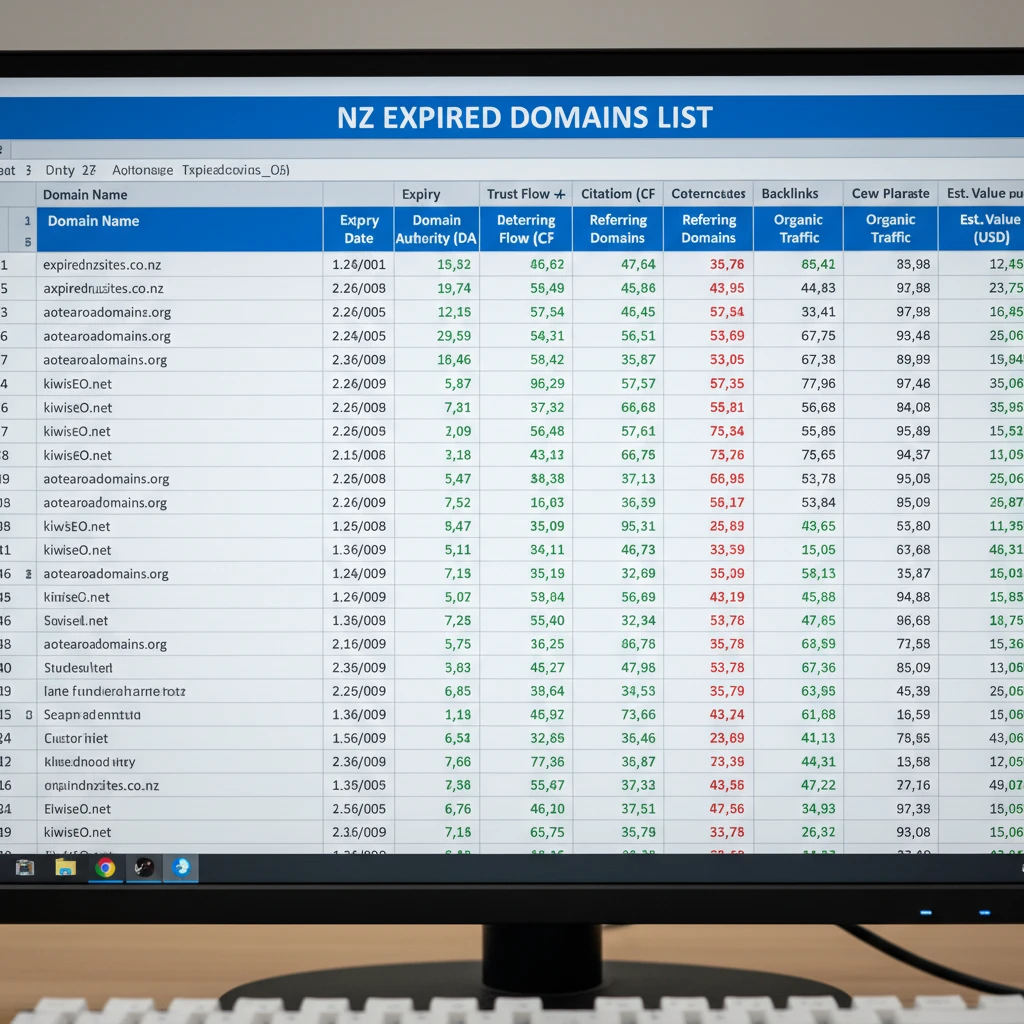
When evaluating domains on an expired list, raw data must be translated into commercial viability. Savvy investors rely on a suite of third-party SEO metrics to determine a domain’s worth. The most critical metrics include Domain Authority (DA) provided by Moz, and Trust Flow (TF) and Citation Flow (CF) provided by Majestic. A domain with a high DA indicates a strong, authoritative backlink profile, making it easier to rank content on search engines. Trust Flow is particularly important; it measures the quality and trustworthiness of the inbound links. A domain with a high Citation Flow (quantity of links) but a low Trust Flow (quality of links) is often indicative of spam and should be avoided. Additionally, analyzing the referring domains using tools like Ahrefs allows investors to see exactly which websites are linking to the expired domain. Links from prestigious New Zealand institutions, universities (.ac.nz), and major news outlets significantly inflate the commercial value of the domain.
Due Diligence: Avoiding Spam and Toxic Domains
Not all domains on nz expired domain lists are valuable; in fact, many are highly toxic. A crucial component of accessing and utilizing these lists is performing rigorous due diligence. Domains are frequently abandoned because they were penalized by Google for violating webmaster guidelines. Previous owners may have used the domain as part of a manipulative Private Blog Network (PBN), engaged in aggressive link spamming, or hosted malicious content. To avoid purchasing a penalized asset, investors must utilize the Wayback Machine (Archive.org) to review the historical content of the website. If a formerly respected New Zealand business domain suddenly started displaying foreign language casino advertisements or pharmaceutical links before it expired, it is likely toxic. Furthermore, checking the anchor text profile is essential; an over-optimization of exact-match commercial keywords is a massive red flag. Proper due diligence ensures that the capital invested in drop catching yields a profitable return rather than a digital liability.
How to Backorder .nz Domains Successfully?
To successfully backorder .nz domains, you must create an account with a specialized NZ drop catching service, fund your account, and place a bid on your desired domain before its exact drop time. If the service catches the domain, it is awarded to the winning bidder.
Once you have identified a valuable target from your nz expired domain lists, the next phase is execution. Backordering is the process of instructing a drop catching service to attempt the registration on your behalf. Because the New Zealand domain market operates on specific registry connections, you cannot simply use international drop catchers; you must utilize services that hold direct accreditation with the DNC and have customized their infrastructure for the .nz namespace. The backordering process is inherently competitive, and understanding the nuances of platform selection, auction dynamics, and post-catch strategy is vital for securing premium assets.
Choosing the Right NZ Drop Catching Service
The success rate of your backorder heavily depends on the technical prowess of the drop catching service you select. In New Zealand, a handful of specialized registrars dominate the drop catching scene. When choosing a service, consider their historical success rate, the transparency of their pricing model, and their infrastructure. Some investors choose to place backorders across multiple different drop catching platforms simultaneously to maximize their chances of success, as different platforms may have varying connection speeds to the registry on any given day. It is important to read the terms of service carefully; most reputable platforms operate on a “no catch, no fee” basis, meaning you only pay if they successfully secure the domain for you.
Navigating the Domain Auction Process
A unique aspect of commercial drop catching is the private auction system. If you are the only user on a platform who places a backorder for a specific domain, and the platform successfully catches it, you will typically acquire the domain for the base backorder fee. However, premium domains from nz expired domain lists often attract multiple interested parties. When a platform catches a domain that has been backordered by multiple users, the domain is placed into a closed, private auction. Only the users who placed an initial backorder are permitted to bid. These auctions usually last for a few days, and the domain is ultimately awarded to the highest bidder. Successful auction bidding requires strict budget management and a clear understanding of the domain’s maximum commercial value to your specific business model. Emotional bidding can quickly erode the return on investment, so setting a hard limit based on projected SEO value or resale potential is strongly advised.

Post-Catch Strategies for Your New Domain
Securing the domain is only the beginning; deploying it effectively dictates its ultimate value. There are three primary post-catch strategies utilized by digital marketers. The first is the 301 Redirect strategy, where the acquired domain is permanently redirected to an existing money site, passing the accumulated link equity and authority to boost the main site’s search engine rankings. The second strategy involves rebuilding the site using historical content (where legally permissible) or creating a highly relevant niche website to leverage the existing authority for affiliate marketing or lead generation. The third strategy is domain flipping, where the investor holds the domain and actively seeks out end-users—such as businesses operating in the same industry as the domain’s previous owner—to sell the asset at a premium markup. Whichever strategy is chosen, rapid deployment is recommended to prevent the existing backlinks from degrading over time.
Frequently Asked Questions
How much does it cost to drop catch a .nz domain?
The cost to drop catch a .nz domain typically ranges from $30 to $100 for the initial backorder fee. However, if multiple users backorder the same domain, it will enter a private auction where the final price can reach hundreds or even thousands of dollars based on commercial value.
Are nz expired domain lists legal to use?
Yes, accessing and utilizing nz expired domain lists is completely legal and compliant with the Domain Name Commission (DNC) regulations. Drop catching is a recognized commercial practice within the domain industry, provided the automated software adheres to the registry’s connection and acceptable use policies.
How long is the redemption grace period for .nz domains?
In New Zealand, .nz domains have a 90-day pending release period after expiration. During this extensive timeframe, the original registrant can still renew the domain. Once the 90 days expire, the domain is officially purged from the registry and becomes available for drop catching.
Can I manually register a dropped .nz domain?
While it is technically possible to manually register a dropped .nz domain, it is highly unlikely you will succeed for premium names. Automated drop catching software submits registration requests in milliseconds, making it virtually impossible for a human typing manually to compete for valuable digital real estate.
What happens if multiple people backorder the same .nz domain?
If multiple individuals backorder the same .nz domain through a drop catching service, the platform will typically place the domain into a closed, private auction. Only those who placed an initial backorder can bid, and the domain is awarded to the highest bidder after the auction closes.
How do I check the history of an expired .nz domain?
To check the history of an expired .nz domain, you should use tools like the Wayback Machine to view past website content, and SEO platforms like Ahrefs or Majestic to analyze the backlink profile. This due diligence ensures you are not acquiring a domain penalized for spam.
