
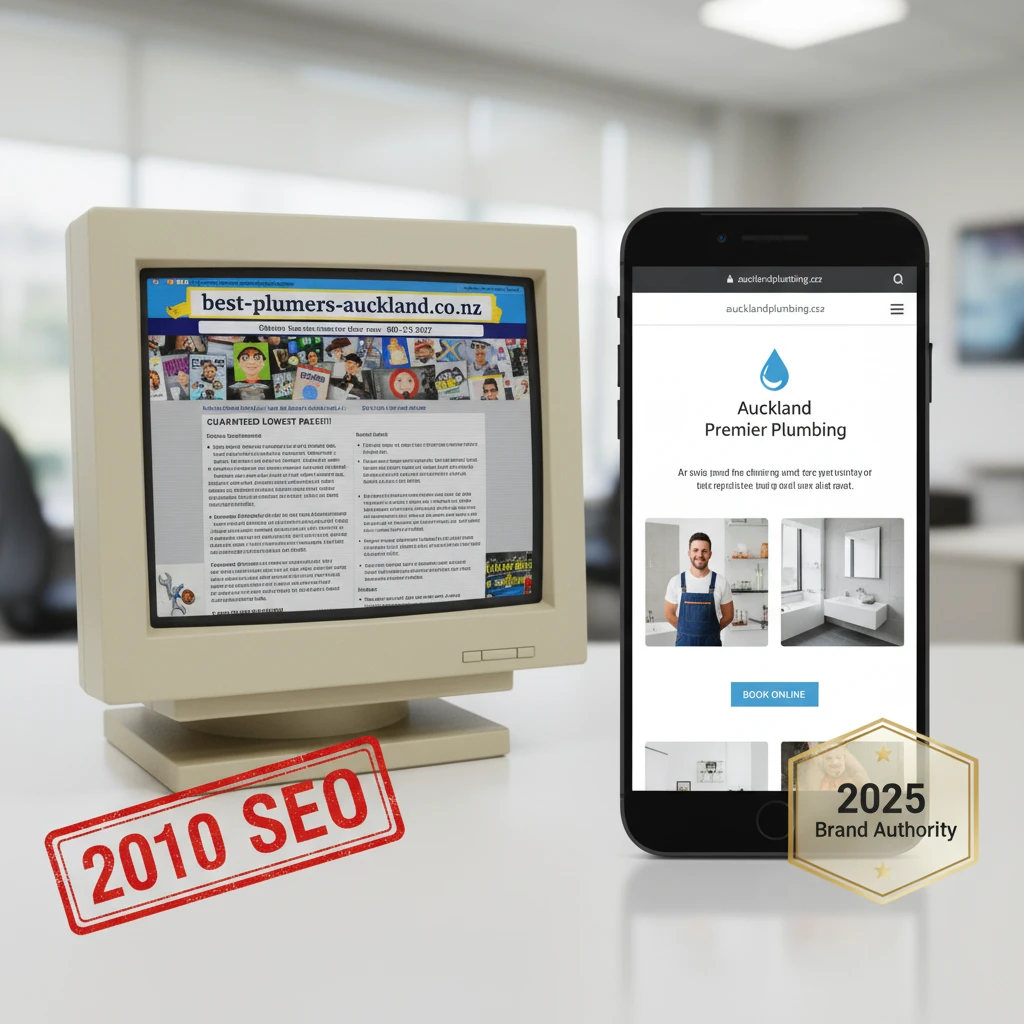
Exact Match Domains (EMD) SEO Value
An Exact Match Domain (EMD) is a website domain name that precisely matches a specific, high-volume search query. Historically, EMDs provided a significant SEO advantage. Today, while no longer a direct ranking factor, they can still offer value in the New Zealand market when combined with a strong local extension like .co.nz and high-quality, brand-focused content.
For years, the digital gold rush in New Zealand was defined by a simple strategy: buy a domain name that exactly matched a popular search term, slap up a basic website, and watch the free traffic roll in. A domain like cheapcarinsurance.co.nz was practically a license to print money. But the SEO landscape has shifted dramatically. Google’s algorithms have grown smarter, prioritizing user experience and genuine authority over simple keyword matching.
This evolution leaves many Kiwi business owners and investors asking a critical question: Is there still SEO value in buying an Exact Match Domain in New Zealand today? The answer is a nuanced “yes,” but the playbook has completely changed. An EMD is no longer a magic bullet; it’s a powerful tool that must be wielded with precision and a modern branding strategy. This guide will cut through the noise, explaining the current reality of EMDs in the NZ market and how to leverage them safely for a competitive edge.
What Exactly is an Exact Match Domain (EMD)?
An Exact Match Domain (EMD) is a domain name that contains the exact keyword phrase a user types into a search engine. The theory was simple: if someone searches for “buy running shoes,” a website with the domain buyrunningshoes.com would be highly relevant and therefore deserve a top ranking.
In the New Zealand context, this often involves local keywords combined with the country’s trusted domain extensions. Examples include:
aucklandelectricians.co.nzwellingtonwebdesign.nzchristchurchflowerdelivery.com
In the early days of SEO, search engines placed immense weight on the words within the domain name itself. Having the target keyword in your URL was a massive ranking signal, often allowing thin, low-quality affiliate sites to outrank legitimate businesses simply because they owned the “right” domain name. This led to a speculative market where premium EMDs were bought and sold for eye-watering sums, purely for their inherent ranking power.
The Truth About EMDs and SEO in New Zealand (2025 Update)
The golden age of lazy EMD rankings came to a screeching halt in September 2012 with Google’s “EMD Update.” This algorithmic change was specifically designed to reduce the ranking prominence of low-quality sites that relied solely on having keyword-rich domain names. The message from Google was clear: a relevant domain name is not a substitute for a quality website.
So, where does that leave us today? Are EMDs dead? Absolutely not. Their role has simply evolved from a direct ranking signal to a powerful branding and relevance signal, especially in local markets like New Zealand.
The Local Advantage: The Power of .co.nz and .nz
For New Zealand businesses, the true power of an EMD often lies in its combination with a local domain extension. Google has explicitly stated that country-code top-level domains (ccTLDs) like .co.nz and .nz act as strong geographical signals. They tell search engines that your website is specifically relevant to users in New Zealand.
When a user in Auckland searches for a “local plumber,” Google wants to show results that are genuinely local. A domain like aucklandplumbers.co.nz provides an immediate, clear signal of local relevance that a generic .com cannot match. While the keyword match itself isn’t the primary ranking factor, the combination of keyword relevance and local signaling creates a powerful foundation for a local SEO strategy.
The .co.nz extension remains the “gold standard” for trust and recognition among Kiwi consumers, having been the default for decades. The newer .nz is seen as more modern and is gaining popularity, but both serve as excellent local signals.
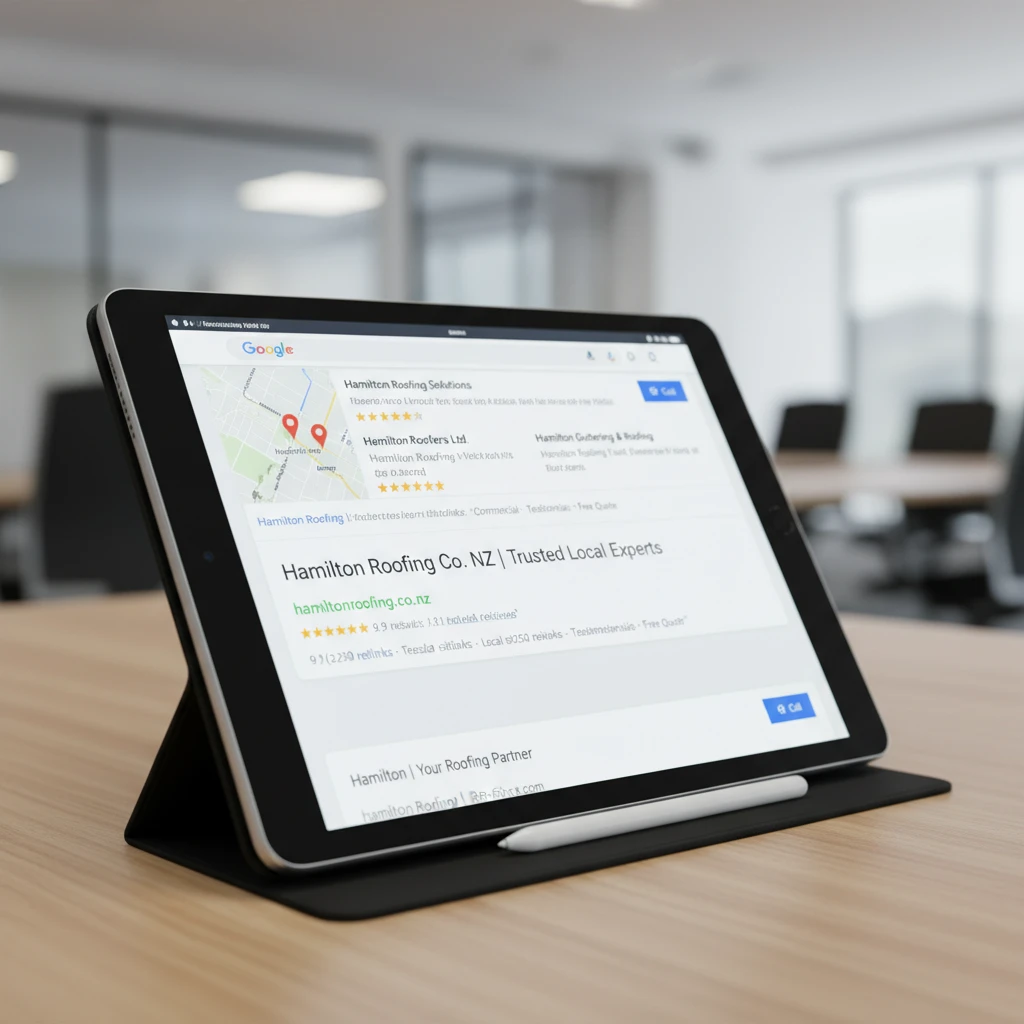
How to Build a Powerful Brand on an EMD Without Getting Penalized
Buying an EMD is no longer a shortcut to success; it’s a commitment to building a real business. If you treat an EMD as a “cheat code” and populate it with thin content, you risk triggering Google’s spam filters. The key to unlocking an EMD’s value in 2025 is to build a genuine brand around it. Here is the blueprint for safety and success.
Prioritize User Experience and Brand Identity
Your website should not look like a generic placeholder designed only for bots. It needs to look and feel like a legitimate business. This means investing in professional web design, creating a unique logo, and developing a clear brand voice.
A site like taurangalandscapers.co.nz shouldn’t just be a list of keywords. It should have an “About Us” page featuring real people, a portfolio of past work, clear contact information including a physical address and phone number, and customer testimonials. These are all trust signals that Google—and your potential customers—look for.
Publish In-Depth, Locally Relevant Content
Gone are the days of creating dozens of near-identical pages targeting slight keyword variations (e.g., “plumber auckland,” “auckland plumber,” “best plumber in auckland”). This practice, known as “keyword cannibalization,” can actually harm your rankings.
Instead, focus on creating a smaller number of high-quality, comprehensive pages that thoroughly cover a topic. For our landscaper example, this could mean detailed guides on “Native NZ Plants for Tauranga Gardens,” “Seasonal Lawn Care Tips for the Bay of Plenty,” or case studies of local projects. This type of content establishes your authority and provides genuine value to local users, which is what Google wants to reward.
Build a Natural, High-Quality Backlink Profile
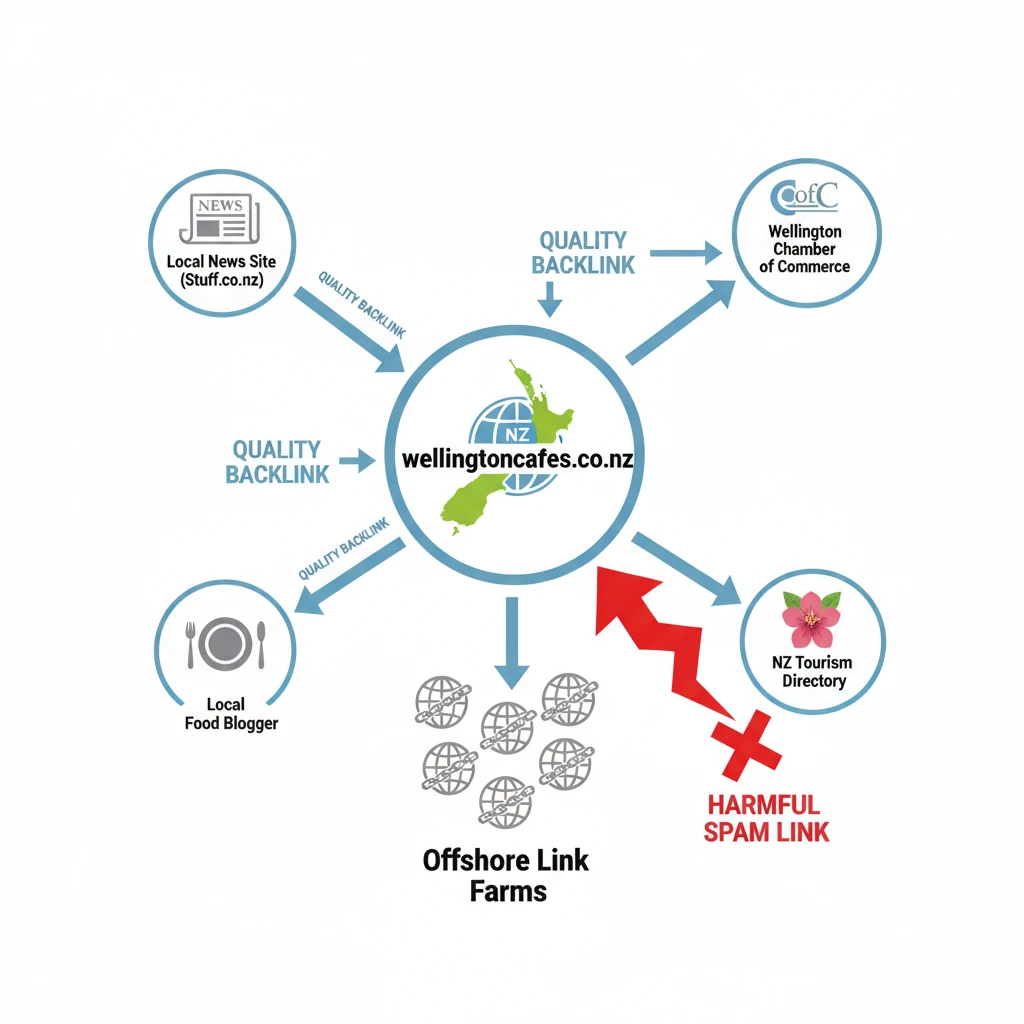
A major red flag for Google is an EMD with a spammy backlink profile. If your site christchurchaccountants.co.nz suddenly gets thousands of links from low-quality overseas directories or blog comment sections, it looks highly unnatural.
Focus on earning links through legitimate means that make sense for a local business. This includes:
- Getting listed in reputable NZ business directories like Yellow, Finda, and Neighbourly.
- Partnering with other local businesses for cross-promotion.
- Sponsoring local events or sports teams and getting a link on their sponsor page.
- Creating link-worthy local resources that local news outlets or community groups might share.
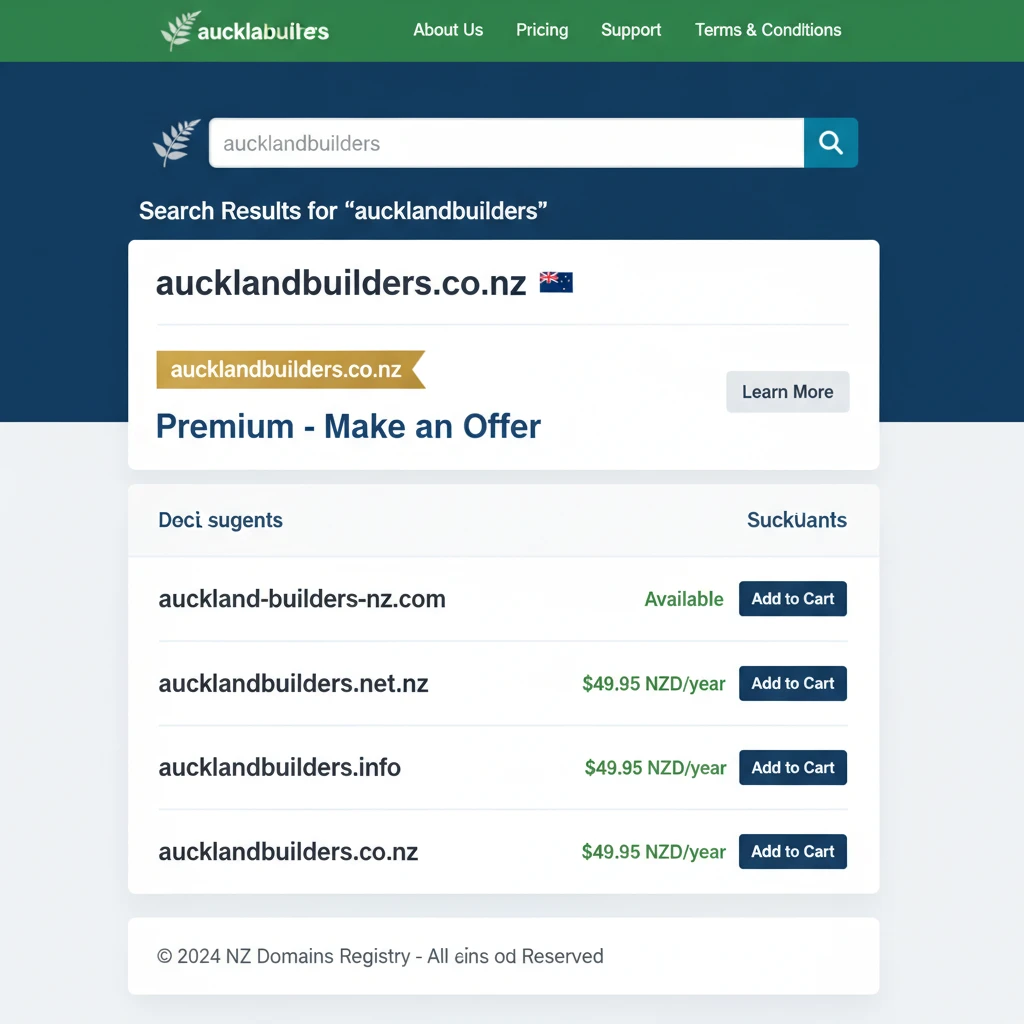
How to Find and Buy Premium Exact Match Domains in NZ
If you’ve decided that an EMD is the right foundation for your business, the next step is acquiring one. Since the most obvious and valuable keyword combinations were registered years ago, you’ll likely be looking at the secondary, or “aftermarket,” for domains.
Here are the primary channels for finding and buying premium NZ domains:
- Domain Brokerages: Specialized brokers like Domain Brokers New Zealand handle the sale of high-value, premium domains. They act as intermediaries, negotiating prices and ensuring a secure transfer process through escrow services. This is often the route for acquiring top-tier, category-defining domains.
- Domain Aftermarket Platforms: Global platforms like Sedo and GoDaddy Auctions list millions of domains for sale, including many
.co.nzand.nznames. You can search by keyword, browse categories, and place bids or buy directly. - Local Registrars: NZ-based registrars like Crazy Domains, Freeparking, and Domains Direct sometimes have their own marketplace sections or offer brokerage services for premium names. They also handle the standard registration of available domains, which typically costs between $23 and $50 NZD per year.
When evaluating a domain, don’t just look at the keywords. Use tools like the Wayback Machine to check its history for any past spammy usage, and use SEO tools to analyze its existing backlink profile. A domain with a clean history is worth paying a premium for, while one with a toxic past can be a liability.
Frequently Asked Questions About NZ Exact Match Domains
Will buying an EMD guarantee me a #1 ranking on Google?
No. An Exact Match Domain is no longer a direct ranking factor that guarantees a top spot. It is just one of hundreds of signals Google uses. To rank #1, you need to combine your EMD with a high-quality, mobile-friendly website, excellent locally-relevant content, and a strong, natural backlink profile.
Is a .co.nz domain better than a .nz domain for SEO?
From a pure SEO perspective, both .co.nz and .nz are treated by Google as strong local signals for New Zealand. There is no inherent ranking advantage to one over the other. However, .co.nz is more established and widely recognized, potentially offering a slight advantage in user trust and click-through rates, which can indirectly influence rankings.
Can I get penalized for having an Exact Match Domain?
You won’t be penalized simply for owning an EMD. However, you can be penalized if you use the domain to engage in spammy practices, such as publishing thin, low-quality content designed solely to target keywords, or building unnatural links. The penalty is for the behavior, not the domain name itself.
Should I use hyphens in my Exact Match Domain?
It is generally recommended to avoid hyphens if possible (e.g., use aucklandplumbers.co.nz instead of auckland-plumbers.co.nz). Hyphenated domains can look less professional, are harder for users to remember and type correctly, and have historically been associated with spammy sites. A non-hyphenated domain is a better long-term brand asset.
How much should I pay for a premium NZ EMD?
The value of a premium EMD varies wildly depending on the industry, search volume of the keywords, and the domain’s history. Prices can range from a few hundred dollars to tens of thousands of dollars for top-tier, category-defining names. It’s an investment decision that should be based on the potential ROI for your specific business.
Is it better to have a branded domain or an EMD?
The best approach in 2025 is often a hybrid: a “brandable” EMD. This is a domain that contains a relevant keyword but also sounds like a legitimate brand. For example, instead of just cheapshoes.co.nz, a domain like solemate.co.nz (implying shoes) or a partial match like apexshoes.co.nz allows you to build a unique brand identity while still signaling relevance.
In conclusion, the era of buying an Exact Match Domain and effortlessly ranking at the top of Google is over. However, for New Zealand businesses, an EMD with a .co.nz or .nz extension remains a highly valuable digital asset. By moving beyond old-school tactics and treating your EMD as the foundation for a legitimate, high-quality brand, you can leverage its inherent local relevance to build a powerful and sustainable online presence.
Verified Sources & References
-
hookagency.com
-
eseospace.com
-
clickrank.ai
-
searchengineland.com
-
rocketspark.com
-
nikaconsulting.co.nz
-
thewebguys.co.nz
-
buildyourwebsite.co.nz
-
domainbrokers.co.nz
-
onlydomains.com
-
sistrix.com
-
targetinternet.com
-
domainbrokers.co.nz
-
redheaddigital.co.nz
-
happymonday.co.nz
-
safaridigital.com.au
Content fact-checked via AI Search Grounding for accuracy as of 4/19/2026.
